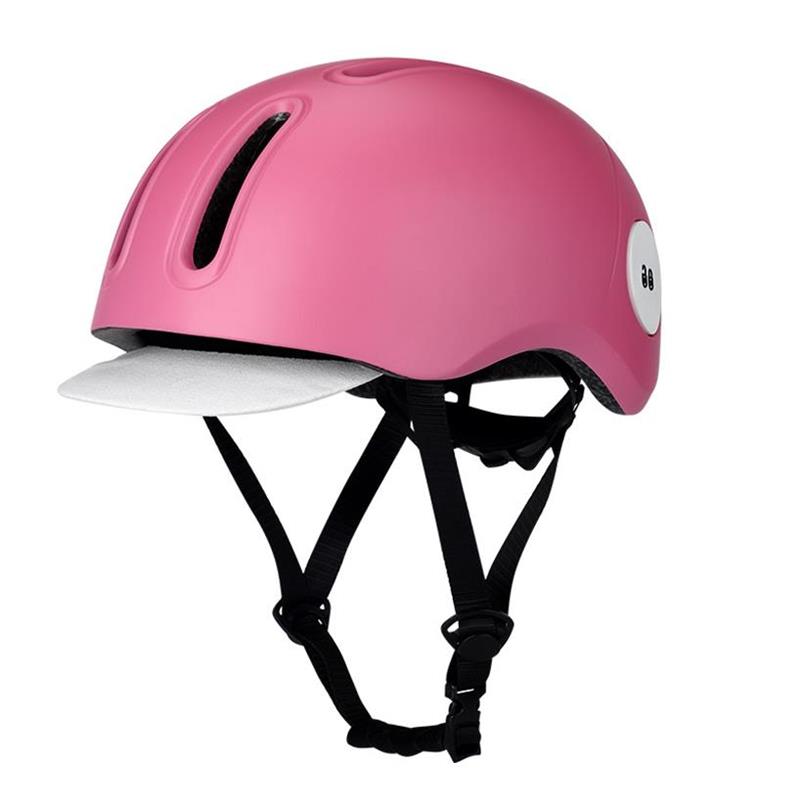
The reason for wearing a cycling helmet is simple and important-to protect the head and reduce injuries. Relevant data show that in more than 500 cycling deaths each year, 75% of the deaths are caused by fatal head injuries. Medical research has found that wearing a helmet while riding a bicycle can prevent 85% of head injuries and greatly reduce the degree of injury and accident mortality. Half-face riding helmets are divided into road-specific (no brim), road and mountain dual-use (with detachable brim) and so on.
Bicycle Helmet-the most solid protective barrier for life in cycling. Falling during riding can cause great damage to the head. Even if the rider is riding at a lower speed along a smoothly sloped bicycle path, safety issues must not be ignored.
Cycling helmets generally consist of 7 parts:
Bike Helmet: the hard shell of the outermost layer of the helmet. In the event of an accidental collision, the hood is the first line of defense to protect the head to disperse the impact.
Cap body: the foam inner layer inside the helmet. It is the second line of defense to protect the head. It is mainly used to absorb the impact force in the accident and reduce the accident injury.
Buckle and hat belt (safety harness): used to fix the position of the helmet. The cap strap is fixed under the ears on both sides, and the position of the buckle is fixed at the throat. Note: After buckling the buckle, leave 1 to 2 finger space on the buckle and throat. Remember not to be too tight or too loose.
Brim: The brim is divided into two types: fixed and adjustable. General road bike riding helmets do not have a brim. The role of the hat brim is to prevent foreign objects from flying into the rider's eyes, and at the same time play a certain shading effect.
Knob: There is a knob for adjusting the tightness on the back of the riding helmet. Riders can adjust the size of the helmet according to the size of their head.